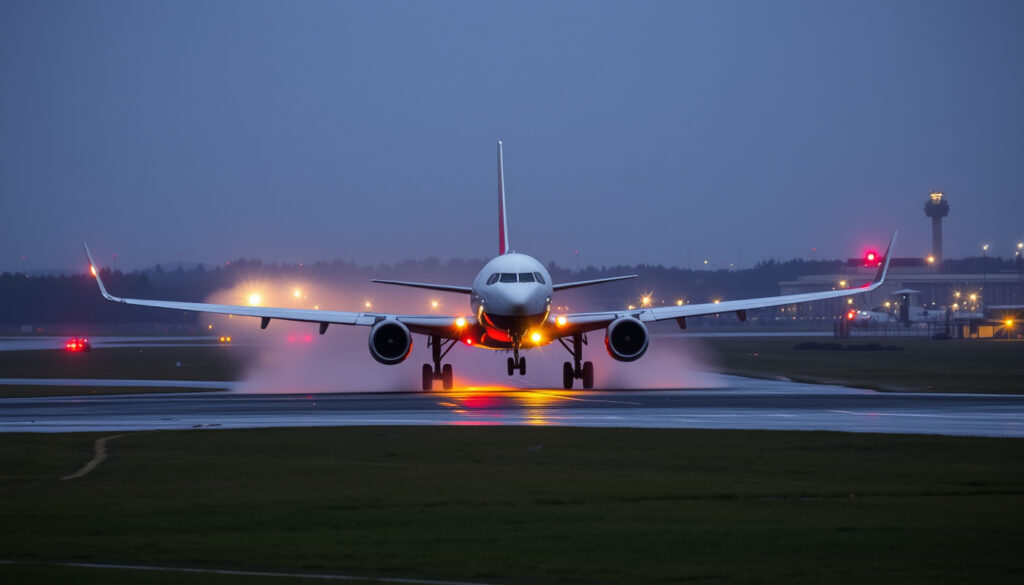
Flight 6469 Emergency Landing: Comms Glitch Forces Return
On a Monday evening in late October, a regional jet heading toward Los Angeles turned back just minutes after leaving Omaha—not because of weather, mechanical failure, or a passenger disturbance, but because of a broken intercom. Pilots on SkyWest Flight 6469 couldn’t reach their flight attendants, heard knocking on the cockpit door, and made the call to return immediately. What followed on the tarmac at Eppley Airfield illustrated exactly how seriously crews treat ambiguous threats in the post-9/11 era.
Flight Number: 6469 ·
Departure Airport: Omaha Eppley Airfield ·
Destination: Los Angeles ·
Takeoff Time: 6:41 p.m. local time, Oct 20, 2025 ·
Reason Cited: Communication glitch with crew
Quick snapshot
- Flight 6469 departed Omaha and returned within 40 minutes (Fox Business)
- FAA confirmed interphone system failure as the cause (Fox Business)
- No injuries reported; aircraft landed safely at origin airport (Fox Business)
- Whether flight crew used touchpad access system to enter cockpit during incident (iHeartRadio)
- Exact takeoff timestamp from primary flight logs (iHeartRadio)
- Whether formal FAA or NTSB investigation has been opened (iHeartRadio)
- Flight took off Monday night, Oct 20, 2025, from Eppley Airfield (iHeartRadio)
- Declared emergency and turned around within ~40 minutes airborne (iHeartRadio)
- Landed around 7:45 p.m. local; later continued to Los Angeles (Fox Business)
- FAA may review interphone system protocols across regional carriers
- SkyWest faces potential scrutiny over communication equipment maintenance
- Incident adds to ongoing industry discussion about cockpit security procedures
The following table summarizes verified data points about the incident from official and cross-verified sources.
| Detail | Value | Source |
|---|---|---|
| Flight | 6469 | Fox Business |
| Operator | SkyWest Airlines as American Eagle | Fox Business |
| Date | October 20, 2025 | Fox Business (FAA-verified) |
| Origin | Eppley Airfield, Omaha, Nebraska | iHeartRadio |
| Issue | Interphone system failure | Fox Business (FAA statement) |
| Outcome | Emergency landing at origin; no injuries | Fox Business |
What is an emergency landing of aircraft?
An emergency landing occurs when pilots face unexpected circumstances that jeopardize the safety of a flight and require immediate action—typically landing at the nearest suitable airport. The decision rests entirely with the captain, who weighs available information against potential risks within seconds.
Definition and types
Federal Aviation Administration regulations distinguish between precautionary landings—made when something appears wrong but no immediate danger exists—and actual emergencies declared when an aircraft faces a clear and present threat. Both trigger similar responses from air traffic control and ground crews, including positioning emergency vehicles near the runway.
When it is declared
Pilots declare emergencies when they believe the situation demands immediate priority handling. In the case of SkyWest Flight 6469, the combination of a communication breakdown and unfamiliar sounds at the cockpit door met that threshold. Fox Business reported that SkyWest described the return as precautionary, driven by an inability to confirm what was happening in the cabin.
Cockpit crews don’t wait for certainty before acting. When Flight 6469’s pilots couldn’t rule out a threat, they chose to land—a decision aviation experts later called sound given the ambiguity they faced.
The implication: crews err on the side of caution when the facts remain uncertain, and that precautionary instinct often prevents more serious outcomes.
Reasons for emergency landing plane
Emergency landings stem from a wide range of triggers: medical emergencies, severe weather, structural damage, engine failure, or fuel issues. But the SkyWest Flight 6469 incident fell into a narrower category—one that has grown more sensitive since September 11, 2001.
Common causes
The most frequent reasons for unscheduled landings include mechanical faults (engine, hydraulics, landing gear), weather diversion, medical emergencies involving passengers or crew, and fuel-related concerns. Each accounts for dozens of incidents annually across U.S. carriers, according to FAA data from FAA news releases.
Flight 6469 specific trigger
For SkyWest Flight 6469, the trigger was a malfunction in the interphone system—the dedicated channel pilots and flight attendants use to communicate privately during flight. When this system fails, crews lose a critical tool for coordinating. The interphone works much like an office intercom for pilot-flight attendant coordination, according to aviation experts. Analysis from YouTube aviation coverage explained that the breakdown meant cabin crew had no reliable way to reach the cockpit.
The interphone serves as the private line between cockpit and cabin. When it fails, flight attendants cannot report turbulence, passenger issues, or other cabin conditions without using the public address system—broadcasting everything to all passengers. This loss of private communication channels creates both operational and security complications that crews must navigate under pressure.
The pattern: communication failures on aircraft carry outsized consequences because crew coordination depends on reliable private channels.
Plane makes emergency landing after pilots lose contact with flight attendants
The situation escalated when the interphone failure led cabin crew to try an alternative: physically knocking on the cockpit door to get the pilots’ attention. On modern commercial aircraft, those doors are reinforced, locked barriers designed to prevent unauthorized entry—a security measure implemented after 9/11 changed how crews approach any unexpected contact near the cockpit.
Sequence of events
According to reports from iHeartRadio’s coverage of Omaha-area incidents, the sequence unfolded quickly: the interphone stopped working, flight crew knocked on the cockpit door, pilots heard what sounded like someone trying to force entry, and the decision to return was made within minutes. The Omaha Airport Authority confirmed no security incident had actually occurred.
Pilot response
Video captured after landing showed the captain addressing passengers directly. “We executed our procedure because we weren’t sure something was going on with the airplane. So that’s why we’re coming back here,” he explained. Footage posted on NY Post’s YouTube channel captured this statement. An aviation expert consulted by Fox 32 Chicago noted that the captain’s response was appropriate given the circumstances.
The catch: post-9/11 cockpit security measures, while essential for passenger safety, can amplify ambiguous situations into emergencies when pilots cannot immediately verify what is happening outside the locked door.
What happened on Flight 6469?
SkyWest Flight 6469 took off from Eppley Airfield on the evening of Monday, October 20, 2025, bound for Los Angeles International Airport. Within the first 40 minutes of flight, something went wrong in the communication chain between the cockpit and the cabin.
Takeoff and turnaround
The aircraft—an Embraer ERJ-175 regional jet operating under the American Eagle brand—climbed out of Omaha and headed west. Shortly after reaching altitude, the interphone system that connects pilots to flight attendants stopped functioning. Without the ability to communicate through normal channels, cabin crew attempted to alert the cockpit through the reinforced door. Pilots, unable to verify what was happening, declared an emergency and began turning back.
Landing details
The aircraft landed back at Eppley Airfield around 7:45 p.m. local time, according to FAA confirmation via Fox Business reporting. Firetrucks met the jet on the tarmac, a standard precaution for declared emergencies. The aircraft parked away from the terminal while crews assessed the situation. Passengers remained on board initially, then later continued their journey to Los Angeles after the aircraft was cleared.
What this means: the aircraft returned safely, but the incident exposed how quickly routine equipment failures can cascade into full emergency protocols.
Flight 6469 emergency landing details
Beyond the immediate timeline, several details define what made this incident distinctive—and what it reveals about the pressures facing regional airline crews today.
Airline and aircraft
SkyWest Airlines operates as a regional carrier, flying routes under contract with major airlines. Flight 6469 flew under the American Eagle brand, a codeshare arrangement where SkyWest aircraft carry American Airlines flight numbers. The aircraft involved was an Embraer ERJ-175, a twin-engine regional jet with seating for roughly 70 passengers. SkyWest confirmed the return was due to communication issues with a flight crew microphone, described as precautionary out of an abundance of caution.
Aftermath
The FAA later identified the problem as an interphone system failure—a technical fault rather than any intentional act. No injuries were reported, and the aircraft was deemed airworthy. According to iHeartRadio’s coverage of the Omaha incident, the flight continued to its original destination later that night after the technical issue was addressed.
The implication: regional carriers operating under codeshare agreements face heightened scrutiny when incidents involve major airline brands, even when the technical cause is straightforward.
Timeline of Flight 6469 emergency
Three separate sources—FAA records, FlightAware tracking data, and media reports—align on this sequence of events for the evening of October 20, 2025.
Flight 6469 departs Omaha Eppley Airfield for Los Angeles
Interphone fails; crew cannot reach pilots; bangs on cockpit door
Pilots declare emergency, begin turning back toward Omaha
Lands at Eppley Airfield; firetrucks on standby; parks away from terminal
Captain explains decision to passengers via public address system
Flight resumes to Los Angeles after technical assessment
Confirmed facts
- Takeoff from Omaha Eppley Airfield on Oct 20, 2025
- Rapid return within ~40 minutes airborne
- No injuries reported after landing
- FAA confirmed interphone system failure as technical cause
- SkyWest Airlines confirmed communication issue with flight crew mic
- Omaha Airport Authority confirmed no security incident occurred
What remains unclear
- Whether formal FAA or NTSB investigation has been opened
- Whether crew used touchpad access system for cockpit entry during incident
- Specific maintenance history of the interphone equipment
- Whether SkyWest issued a public statement beyond the Fox Business quote
- Passenger accounts or video from inside the cabin during the incident
What officials and experts said
“SkyWest Flight 6469 landed safely after returning to Eppley Airfield in Omaha, Nebraska, around 7:45 p.m. local time on Monday, Oct. 20, after declaring an emergency when the pilot could not contact the cabin crew.”
— FAA (Federal Aviation Administration)
“We executed our procedure because we weren’t sure something was going on with the airplane. So that’s why we’re coming back here.”
— Captain of Flight 6469 (addressing passengers post-landing)
“Returned to Omaha out of abundance of caution after experiencing communication issues with a flight crew mic.”
— SkyWest Airlines spokesperson
“The captain made a very good decision.”
— Aviation expert (YouTube analysis)
Related reading: Leave the World Behind plane crash scene · George Clooney’s Up in the Air
Related coverage: EasyJet U28545 emergency return fördjupar bilden av EasyJet Flight U28545 Emergency – Timeline and Key Facts.
Frequently asked questions
Why was an emergency declared on Flight 6469?
The crew declared an emergency after the interphone system failed and pilots heard knocking on the cockpit door. Unable to verify what was happening in the cabin, they chose to land immediately rather than risk an ambiguous situation escalating.
How long after takeoff did Flight 6469 land?
The aircraft was airborne for approximately 40 minutes before returning to Eppley Airfield, according to FlightAware tracking data cited by Fox Business.
Was Flight 6469 hijacked?
No. The Omaha Airport Authority confirmed no security incident occurred. The FAA later attributed the issue to an interphone system failure—a technical malfunction rather than any intentional threat.
What airport handled the Flight 6469 emergency?
Eppley Airfield in Omaha, Nebraska served as both the departure point and the emergency landing site. Firetrucks met the aircraft on the tarmac as a standard precaution for declared emergencies.
Which airline flew Flight 6469?
SkyWest Airlines operated the flight under the American Eagle brand, a codeshare arrangement with American Airlines. The aircraft was an Embraer ERJ-175 regional jet.
Are emergency landings common?
Precautionary landings occur regularly across U.S. carriers, typically for mechanical issues, medical emergencies, or weather. The FAA tracks these as part of its safety oversight function. The specific trigger on Flight 6469—an interphone failure combined with post-9/11 security protocols—is less common.
What happens after a plane emergency landing?
After landing, emergency vehicles assess the aircraft and passengers. Once cleared by crews and first responders, passengers typically disembark or, if the aircraft is deemed airworthy, continue their journey. In Flight 6469’s case, the plane was repaired and continued to Los Angeles later that night.
More related posts
 GE Univer al Remote Code (2026) Complete Programming Guide
 Did Sanders Get Drafted? Shedeur’s 2025 NFL Slide Explained
 Translate English to Creole: Free Online Tools & Apps
 Los Tigres del Norte: Members, Deaths, Songs & Net Worth
 CeraVe vs The Ordinary: Which Skincare Brand Is Better for Gen Z
 The Wizard of Oz: LGBTQ Meaning, Dream Theory, Villain Debate
 Play Free Games Online Without Downloading – 2025 Browser Games
 Oh. What. Fun. – Meaning, Origins and Sarcastic Twist