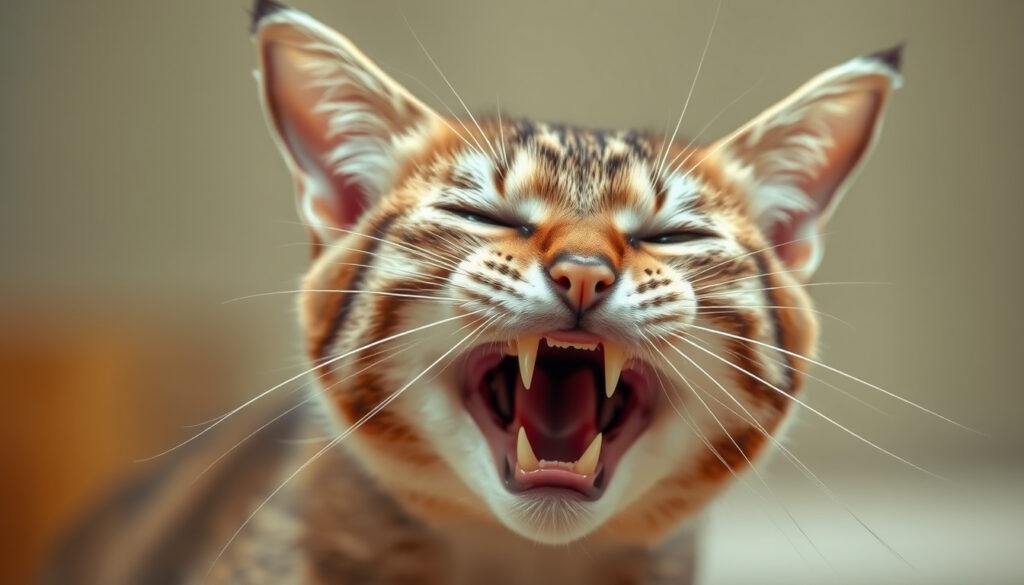
Why Does My Cat Bite Me? A Complete Guide to Feline Biting
You’re petting your cat, enjoying a quiet moment, when suddenly—chomp. That gentle purr turned into a bite.
Most Common Bite Triggers: Fear, play, and petting-induced overstimulation (Maddie’s Fund) ·
Infection Risk: Cat bite puncture wounds seal over quickly, trapping bacteria (VCA Hospitals) ·
Body Language Precedes Bites: Tail twitching, ear flattening, and dilated pupils signal impending bite (PetMD)
Quick snapshot
Four key patterns, one takeaway: every bite type has a distinct trigger and a specific body language prelude. Knowing which category your cat’s bite falls into is the first step to stopping it.
Understanding these four bite types sets the stage for a closer look at the data.
| Fact | Detail |
|---|---|
| Cat Bite Infection Risk | Puncture wounds can seal over quickly and trap bacteria, leading to infection (VCA Hospitals) |
| Biting Demographics | Fear, play, and petting-induced aggression are the top three reasons cats bite people they know (Maddie’s Fund) |
| Petting Tolerance Window | Overstimulation from petting is a frequent trigger for cat bites (GoodRx) |
| Body Language Cues | Tail twitching, ear flattening, and dilated pupils signal an impending bite (PetMD) |
Why does my cat bite me when I pet him?
Petting-induced aggression is one of the most common reasons cats bite their owners. The cat is not being mean—it’s a neurological limit. Continuous stroking can overstimulate the nervous system, especially on sensitive areas like the back, base of the tail, and belly (GoodRx).
What is petting-induced aggression in cats?
- Petting can rapidly overstimulate a cat’s nervous system, especially on the back, base of the tail, and belly (GoodRx)
- Clear warning signs precede the bite: tail twitching, skin rippling, ear flattening, and dilated pupils (PetMD)
- Respecting the cat’s individual tolerance threshold prevents the escalation from purring to biting (PetMD)
How to recognize signs of overstimulation before a bite
- Tail twitching or thumping is the earliest warning sign (PetMD)
- Skin ripples along the back, especially when you pet toward the tail (PetMD)
- Ears flatten sideways or rotate back, pupils dilate (PetMD)
Overstimulation bites are a communication failure, not aggression. Most cats show their first warning signs after 5–10 minutes of continuous petting. Stop petting at the first tail twitch and you’ll avoid the bite entirely.
The implication: petting-induced biting is entirely preventable once you learn your cat’s unique tolerance window. Every cat is different—some can handle 10 minutes, others only 30 seconds. Watch the body language, not the clock.
Why does my cat grab my hand and bite me then lick me?
This bite-lick sequence often confuses owners. Your cat bites your hand, then immediately licks the same spot. It’s a blend of two primal instincts: hunting and grooming.
What does it mean when cats bite you gently?
- Gentle nibbling, especially during grooming, is a form of allogrooming and social bonding among cats and their owners (PetMD)
- Context and body language clearly differentiate love bites from aggressive warning bites: relaxed posture versus tense, stiff body (PetMD)
- Overstimulation can cause a gentle bite to escalate to a harder bite if warning signs are ignored (GoodRx)
Why do cats purr while biting?
- Purring while biting can indicate contentment, but it can also be a self-soothing mechanism during mild overstimulation (PetMD)
- The bite-lick sequence is a residual combination of hunting instinct (catch/kill) and grooming behavior (licking) (PetMD)
- Gentle love bites are inhibited bites that do not break skin and are often a sign of social bonding (PetMD)
A gentle love bite that escalates to a harder bite is not a change of heart—it’s overstimulation. The cat started content, then hit its threshold. End the session when you feel the first pressure increase, not after the bite.
The pattern: love bites are a positive social signal when the cat’s body stays relaxed. Tense muscles, flattened ears, or a sudden tail twitch mean the bite is about to turn from affection to discomfort.
At what age are cats most aggressive?
Aggression in cats isn’t constant across their lifespan. It peaks during specific developmental windows, driven by hormones, energy levels, and social learning.
What age are cats most rebellious?
- Play aggression peaks between 5 and 12 months of age, coinciding with kitten teething and adolescent energy (Purina)
- Territorial and social aggression commonly develops in cats aged 2 to 4 years, especially in unneutered males (Animal Behavior Associates)
- Early socialization and continued interactive play reduce the likelihood of problematic biting across all life stages (Purina)
What happens to cats during puberty?
- Adolescent cats (6 months–2 years) test boundaries and have high energy levels (Purina)
- Hormonal changes in unneutered cats increase territorial and mounting behaviors (Animal Behavior Associates)
- Boredom biting is common during this phase; structured play sessions with wand toys are essential (Purina)
Why this matters: knowing the age-related aggression peaks helps you prepare. A kitten’s play biting is normal and trainable; an adult cat’s sudden aggression may signal an underlying medical issue (Paumanok Veterinary Hospital).
How to discipline a cat if they bite you?
Discipline is the wrong word. Cats don’t understand punishment the way humans do. The goal is to teach the cat that biting ends the interaction, not to make the cat feel guilty.
Do cats feel guilty after biting?
- Whether cats experience guilt in the human sense after biting is unclear—evidence points to learned responses to owner disappointment (ASPCA Feline Behavior Guidelines)
- Cats may show appeasement behaviors (licking, rubbing) after biting, but these are likely de-escalation signals, not guilt (PetMD)
How to tell if a cat is bonded with you despite biting incidents
- Punishment (yelling, spraying, physically scolding) is ineffective and reliably increases fear, stress, and aggression (PetMD)
- Withdrawing attention or leaving the room is the gold standard for teaching a cat that biting ends interaction (PetMD)
- Redirecting biting to appropriate toys, wand toys, and structured play sessions is the most successful behavior-modification strategy (Purina)
- Withdraw attention immediately. When the cat bites, calmly stand up and leave the room for 2–5 minutes. This teaches that biting ends all interaction (PetMD).
- Redirect to an appropriate toy. Offer a wand toy or a plush toy that the cat can bite and kick instead of your hand (Purina).
- Reward calm play. When the cat engages with the toy rather than biting you, offer a treat or gentle praise to reinforce the behavior (PetMD).
Punishment may stop the bite in the moment, but it damages the bond and increases the likelihood of future, more intense bites. The owner who walks away and ignores the cat for 5 minutes teaches a far more effective lesson.
The catch: cats are not spiteful. They bite because they are overwhelmed, scared, or playing. Treating the underlying cause—not the symptom—is the only sustainable path.
What does it mean when cats bite you gently?
Gentle bites are often the most misunderstood. They can signal affection, overstimulation, or play depending on the context.
Is a gentle bite a love bite?
- Gentle nibbling, especially during grooming, is a form of allogrooming and social bonding among cats and their owners (PetMD)
- Context and body language clearly differentiate love bites from aggressive warning bites: relaxed posture versus tense, stiff body (PetMD)
- Overstimulation can cause a gentle bite to escalate to a harder bite if warning signs are ignored (GoodRx)
How to differentiate love bites from aggressive bites
- Love bites: soft pressure, no puncture, cat is purring, eyes half-closed, body relaxed (PetMD)
- Aggressive bites: hard pressure, puncture, hissing or growling, tense body, flattened ears, dilated pupils (PetMD)
- If the cat’s body is stiff and the tail is thrashing, it’s not a love bite (PetMD)
The pattern: gentle bites are a good sign when the cat’s body is relaxed. They become a problem only when the owner misses the transition from calm to overstimulated.
Timeline of Cat Biting Behavior by Age
Understanding when biting is most likely to occur helps owners prepare and intervene at the right stage.
| Age Period | Behavior |
|---|---|
| 0–6 months (Kitten) | Play biting and mouthing during teething and exploration. Teaching bite inhibition and providing chew toys is critical (Purina). |
| 6 months – 2 years (Adolescent) | Peak age for play aggression and boundary testing. Boredom biting common; interactive wand play essential (Purina). |
| 2–4 years (Adult) | Territorial and status-related aggression peaks. Neutering significantly reduces risk in males (Animal Behavior Associates). |
| 7+ years (Senior) | Biting often linked to pain (arthritis, dental disease) or cognitive decline. Veterinary assessment should be the first step (Paumanok Veterinary Hospital). |
The implication: biting is not a fixed behavior. It evolves with the cat’s age, health, and environment. A senior cat that starts biting likely needs a vet, not a trainer.
Confirmed Facts and What’s Unclear
Confirmed facts
- Cats bite to communicate specific needs or emotional states—not out of spite or dominance (Maddie’s Fund)
- Punishment is counterproductive and reliably damages the human-animal bond (PetMD)
- Clear body language cues precede overstimulation, fear, and play bites (PetMD)
- Gentle love bites are inhibited bites that signify social bonding (PetMD)
What’s unclear
- Whether cats experience guilt in the human sense after biting (evidence points to learned responses to owner disappointment)
- The exact evolutionary driver of the bite-lick sequence (likely a residual kill–groom instinct)
The distinction matters: confident facts allow owners to act decisively, while remaining uncertainties highlight areas where more research is needed before drawing firm conclusions.
Expert Perspectives on Cat Biting
“Biting is a primary communication tool for cats. Owners must look at the whole context—ears, tail, pupils, and environment—to understand what the cat is saying.”
— Dr. Mikel Delgado, PhD, Certified Feline Behavior Consultant (Feline Minds)
“A cat that is highly aroused by one stimulus (e.g., a window cat) may bite its owner if approached before it has calmed down.”
— ASPCA Feline Behavior Guidelines
Both experts agree: the key to preventing bites is understanding the cat’s perspective. Punishment ignores the root cause; observation and environmental management address it.
For cat owners, the choice is clear: learn to read your cat’s body language, or risk a trip to the emergency room. Cat bites carry a significant infection risk (VCA Hospitals), and prevention through understanding is far easier than treatment after the fact.
petassure.com, spcapetinsurance.co.nz, purina.co.uk, animalfamilyveterinarycare.com
Understanding why your cat bites you can be easier when you also learn why cats lick their owners, as both behaviors often stem from similar instincts.
Frequently asked questions
Is it normal for my cat to bite me?
Yes, biting is a normal form of communication for cats. It can signal play, overstimulation, fear, or affection. The key is to understand the context and body language (Maddie’s Fund).
Why does my cat bite my ankles when I walk by?
This is typically play aggression. Cats, especially kittens and adolescents, see moving feet as prey. Redirect this behavior with interactive toys before it becomes a habit (Purina).
Should I punish my cat for biting me?
No. Punishment increases fear and aggression. Withdrawing attention and leaving the room is the most effective way to teach your cat that biting ends interaction (PetMD).
Can adult cats be trained to stop biting?
Yes, adult cats can learn to stop biting through consistent redirection, positive reinforcement, and environmental enrichment. Identify the trigger and address it without punishment (PetMD).
Why does my cat bite me when I’m sleeping?
This may be play aggression, hunger, or a bid for attention. Ensure your cat has enough daytime play and consider feeding a small meal before bed to reduce night-time biting (Purina).
Do cats understand that biting hurts us?
Cats can learn that biting leads to a reaction (withdrawal, yelp), but they don’t understand pain in the same way humans do. They respond to the outcome: if biting stops interaction, they learn to avoid it (PetMD).
Related reading
More related posts
 Need for Speed Unbound: Review, Success & Heat Comparison
 Where’s My Tax Refund? Check Your IRS Status
 Codes for Dress to Impress: Active DTI List April 2026
 Morgan Wallen Tour 2024: Dates, Tickets & Dublin Shows
 Words That Start With N: Lists, Examples & Meanings
 Blue People of Kentucky: The Fugates’ Genetic Mystery
 Jennifer Love Hewitt 2025 – Confirmed Projects and Roles