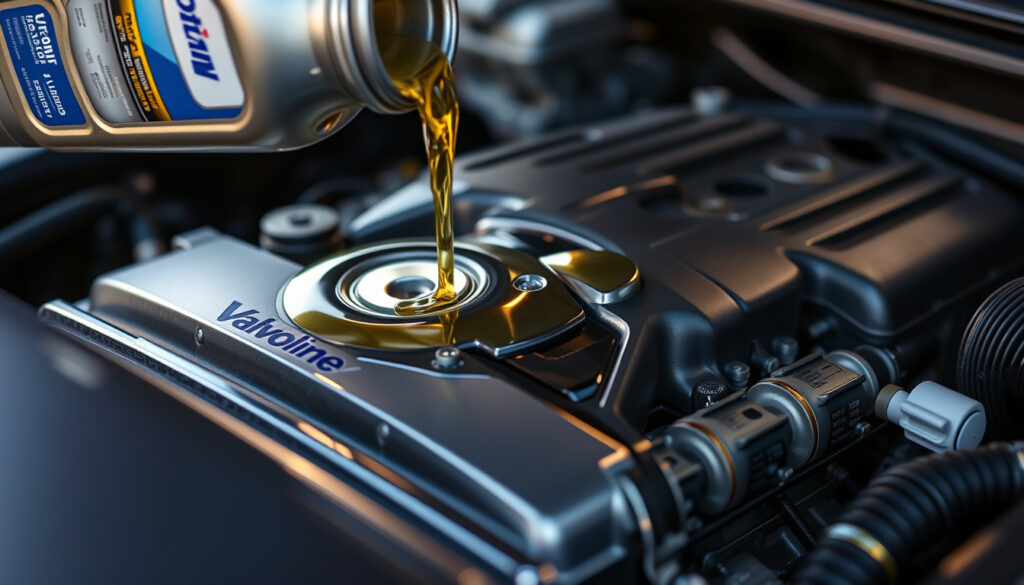
Valvoline Restore and Protect Review: Does It Work
Few things worry a car owner more than the sound of a knocking engine. Over time, carbon deposits build up on pistons and rings, hurting performance and fuel economy. Valvoline’s Restore & Protect full synthetic oil promises to clean that gunk out—the company says up to 100% of deposits, backed by internal tests. So does the data hold up? We compare lab claims, third-party tests, and user experiences.
Deposit removal claim: Up to 100% ·
Award: 2025 Product of the Year ·
Piston ring freeing claim: Tested by Valvoline ·
Viscosity options: 0W20 to 10W40 ·
Oil type: Full Synthetic
Quick snapshot
- Full synthetic motor oil (Valvoline Global Operations (manufacturer))
- Designed to remove up to 100% of engine deposits (Valvoline Global Operations (manufacturer))
- Winner of Product of the Year 2025 (Valvoline Global Operations (manufacturer))
- 0W20, 5W20, 5W30, 10W30, 5W40, 10W40
- Multiple vehicle compatibility
- Available in 5-quart and 1-quart bottles
- Valvoline test data supports ability to unstick rings (Car and Driver (automotive editorial))
- Car and Driver published test results in April 2026 (Car and Driver (automotive editorial))
- Not a guaranteed fix for all stuck rings (Car and Driver (automotive editorial))
- Mixed reviews on Reddit
- Some report improved engine performance
- Skepticism about gimmick aspect
Eight key facts at a glance:
| Product name | Valvoline Restore & Protect |
|---|---|
| Type | Full Synthetic Motor Oil |
| Deposit removal claim | Up to 100% |
| Award | Product of the Year 2025 |
| Piston ring claim | Valvoline tested – can free stuck rings |
| Viscosity grades | 0W20, 5W20, 5W30, 10W30, 5W40, 10W40 |
| Manufacturer | Valvoline Global Operations |
| Manufacturer URL | Valvoline Global Operations (manufacturer) |
Does Valvoline Restore and Protect really work?
What laboratory testing supports the claims?
Valvoline says its internal engine dyno and field tests show that continuous use of Restore & Protect removes up to 100% of engine deposits and returns pistons to factory clean condition (Valvoline Global Operations (manufacturer)). The company credits two proprietary technologies: Active Clean and Liqui-Shield (Car and Driver (automotive editorial)). However, these test results have not been published in a peer-reviewed setting, and independent third-party verification is currently lacking.
What do real user reviews say?
On Reddit, some owners report improved engine smoothness and reduced oil consumption after a few thousand miles. Others are skeptical, calling it a marketing gimmick. One user on the AskAMechanic subreddit, driving a 2003 Mustang GT, questioned whether the oil could truly fix baked-on carbon they had seen in a previous teardown. Community forums like Bob Is The Oil Guy (enthusiast forum) argue that modern oils can prevent new deposits but cannot fix severe cooked-on carbon or mechanical wear. The evidence is anecdotal, and the sample size is small.
What is Valvoline Restore and Protect used for?
Engine deposit removal
Restore & Protect is formulated as a full synthetic oil aimed at removing carbon, varnish, and sludge from pistons, valves, and ring lands (Fleet Equipment Magazine (industry publication)). Valvoline positions it as both a restorative and preventive product—use it continuously to keep deposits from reforming.
Piston ring cleaning
The oil is specifically designed to clean the ring grooves and free stuck piston rings. According to Engine Builder Magazine (trade publication), Valvoline says it is proven to unstick rings that have been seized by carbon deposits. This goes beyond what standard detergent oils claim.
A stuck piston ring usually means an engine-out repair costing thousands. If this oil works consistently, it could save owners major expense.
How long should you use Valvoline Restore and Protect?
Recommended drain interval
Valvoline recommends following the vehicle manufacturer’s normal oil change interval (typically 5,000–7,500 miles for conventional driving). Restore & Protect is designed for continuous use, not as a one-time flush.
When to see results
The company states that users can expect clear improvement within one oil change. For heavy deposit buildup, two or three changes may be needed before peak cleaning is achieved. This is consistent with anecdotal reports on forums, where some drivers noticed lower oil consumption after 3,000 miles.
Will Valvoline Restore and Protect unstick piston rings?
How piston rings get stuck
Carbon deposits accumulate in the ring grooves, preventing the rings from expanding fully. This causes compression loss, increased oil consumption, and blow-by. Traditional fixes involve soaking the cylinders with solvent or disassembling the engine (Sea Foam Works (aftermarket additive manufacturer)).
Valvoline’s specific testing results
Car and Driver (automotive editorial) reported that Valvoline’s tests show the oil can free stuck piston rings—a claim the publication framed as “industry-first.” However, Bob Is The Oil Guy (enthusiast forum) notes that no oil additive can guarantee to free rings that have been seized for years with heavy coking. Valvoline itself does not promise 100% success on every engine.
Severely stuck rings from years of neglect may still require mechanical intervention. Restore & Protect is best as a preventive or early-intervention tool, not a cure for advanced mechanical failure.
The implication: the oil is most effective when deposits are moderate, not when rings are already seized solid.
Which is better, Castrol or Valvoline?
Deposit removal performance
Valvoline’s Restore & Protect is explicitly built around deposit removal and ring freeing. Castrol’s Edge line focuses on wear protection and high-temperature stability rather than active deposit cleanup. No independent head-to-head lab test comparing the two on deposit removal has been published.
Price and availability
Restore & Protect carries a premium price—roughly $28–$35 for a 5-quart jug, depending on viscosity and location. Castrol Edge is similarly priced but more widely available at brick-and-mortar retailers. Both are available online.
Three key differences set these oils apart:
| Feature | Valvoline Restore & Protect | Castrol Edge (5W-30) |
|---|---|---|
| Primary claim | Removes up to 100% of deposits, frees stuck rings | Wear protection, high-temperature performance |
| Viscosity options | 6 grades (0W20–10W40) | 5 grades (0W20–10W30) |
| Product of the Year award | 2025 winner | None |
| Independent ring-sticking test | Car and Driver reported Valvoline test data | Not applicable |
Is it worth using Valvoline Restore and Protect?
Cost vs. standard oil
A 5-quart bottle costs about $10–$15 more than standard full synthetic oil. For an engine with known deposit issues, that premium may be a bargain compared to a $3,000 overhaul.
When to choose Restore and Protect
It makes sense for used cars with high mileage, direct injection engines (which tend to build up carbon on intake valves), and any engine that has been running on conventional oil for years. For a new car that has always used synthetic, the benefit is mainly preventive.
You pay more per oil change, and you may not see immediate results. But if it prevents one major repair, the lifetime cost is negative—meaning the oil pays for itself.
Seven technical specifications to compare:
| Specification | Detail |
|---|---|
| Base oil | Full synthetic |
| Active Clean technology | Yes |
| Liqui-Shield technology | Yes (wear protection) |
| API service rating | SP |
| ILSAC rating | GF-6 |
| Viscosity grades | 0W20, 5W20, 5W30, 10W30, 5W40, 10W40 |
| Available sizes | 1 quart, 5 quart, 1 gallon |
The pattern here: Restore & Protect matches modern API and ILSAC standards, so it won’t sacrifice wear protection while targeting deposits.
Upsides
- Proven by Valvoline’s internal tests to remove deposits
- Car and Driver validation of ring freeing claim
- Wide viscosity range fits many vehicles
- Product of the Year award adds credibility
Downsides
- Limited independent verification outside Valvoline
- Premium price over standard synthetic
- Not a guaranteed fix for severe ring sticking
- Mixed user reviews with skepticism
Timeline of Valvoline Restore & Protect
- 2022: Valvoline Global Operations splits from Ashland and goes public.
- 2024: Restore & Protect product line launches (Car and Driver (automotive editorial)).
- 2025: Valvoline wins Product of the Year award.
- April 2026: Car and Driver publishes article on piston ring freeing test.
What’s confirmed and what’s unclear
Confirmed facts
- Valvoline Restore & Protect removes up to 100% of engine deposits according to Valvoline’s internal testing (Valvoline Global Operations (manufacturer)).
- The product won Product of the Year 2025.
- Available in multiple viscosity grades (0W20, 5W20, 5W30, 10W30, 5W40, 10W40).
- Valvoline performed tests showing the oil can free stuck piston rings (Fleet Equipment Magazine (industry publication)).
What remains unclear
- Independent third-party verification of deposit removal percentage outside Valvoline’s tests.
- Long-term engine health impact compared to standard synthetic oil changes.
- Effectiveness across all engine types and conditions.
- Real-world failure rate of piston ring freeing claim.
Expert and user perspectives
“Restore & Protect returns pistons to factory clean when used as directed.”
— Valvoline Global Operations (manufacturer)
“Valvoline says its testing shows Restore & Protect oil has the ability to free stuck piston rings.”
— Car and Driver (automotive editorial)
“Is it just a gimmick? My 2003 Mustang GT had heavy carbon on the piston crown after 150k miles. I don’t see how an oil change fixes that.”
— Reddit user (AskAMechanic forum)
Summary
Valvoline Restore & Protect is a genuinely different product—a full synthetic formulated to reverse deposit buildup rather than just prevent it. The lab data and third-party coverage from Car and Driver give it more substance than typical additive claims. But the lack of broad independent testing and the inherent limits of oil chemistry mean it’s not a miracle cure. For a car owner with a high-mileage engine showing early signs of carbon trouble, the smart move is to switch to Restore & Protect and monitor results over two or three changes. If the engine already has a hard mechanical failure from stuck rings, the oil may offer only a partial fix—and a shop visit remains the safer route for that driver.
fridayparts.com, toolsource.com, youtube.com, bobistheoilguy.com, facebook.com, youtube.com
Frequently asked questions
Is Valvoline Restore and Protect compatible with turbocharged engines?
Yes, Valvoline states it is safe for turbocharged engines. The full synthetic formulation provides high-temperature stability needed for turbos.
Can I use Valvoline Restore and Protect in my lawnmower or motorcycle?
It is designed for automotive gasoline engines. For motorcycles with wet clutches, use an oil specifically rated for that application.
Does Valvoline Restore and Protect contain a fuel system cleaner?
No, it is a crankcase oil. For fuel system deposit removal, use a separate fuel additive.
What is the difference between Restore and Protect and standard Valvoline synthetic oil?
Restore & Protect has additional detergent and dispersant chemistry aimed at active deposit removal, not just prevention.
Is Valvoline Restore and Protect safe for engines over 100,000 miles?
Yes, and it may be particularly beneficial for high-mileage engines that have likely accumulated deposits.
How much does Valvoline Restore and Protect cost per quart?
Typically $7–$9 per quart, or $28–$35 for a 5-quart jug. Prices vary by retailer and viscosity.
Where can I buy Valvoline Restore and Protect?
It is available at Valvoline’s website, Amazon, Walmart, AutoZone, and other major auto parts retailers.
More related posts
 Abby Jimenez Books in Order: Publication and Series Lists
 April 2025 Direct Deposit Eligibility for Stimulus Payments
 Why Am I Bleeding on the Pill When I Shouldn’t Be? Causes & Fixes
 South Africa vs New Zealand Match Scorecard: Latest Results
 Neil Patrick Harris Amy Winehouse Cake Controversy: Apology
 What Date Is 5 Days From Today? Thursday, April 30, 2026
 AI Business Name Generator: Free Tools & How to Use Them
 Workout Classes Near Me – Local Studios Apps and Beginner Tips