The Man in the High Castle: Why Cancelled & Is It Worth Watching
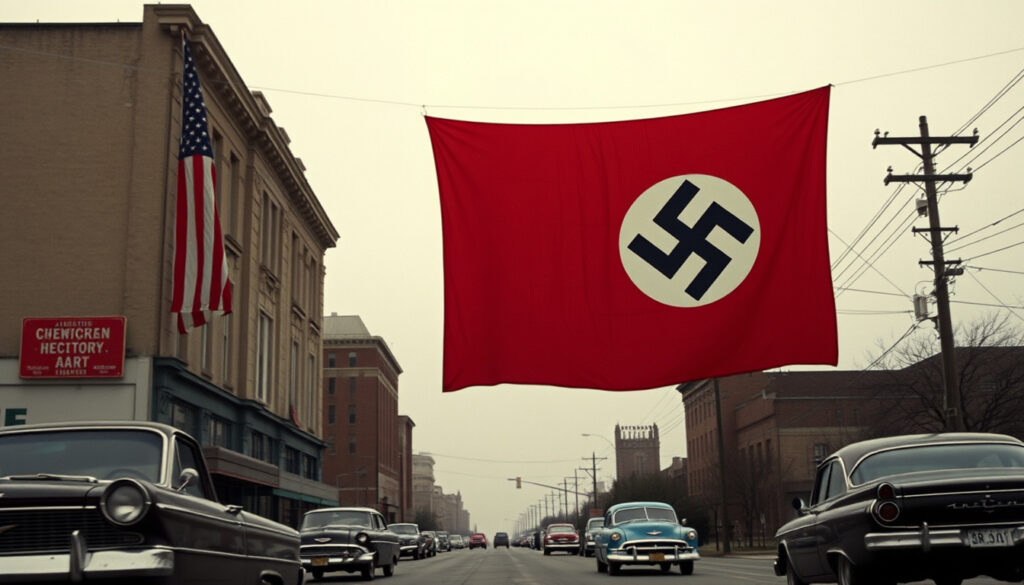
There’s something about a world that almost was that keeps pulling us back. The Man in the High Castle, adapted from Philip K. Dick’s 1962 novel, imagines a 1960s America where Nazi Germany and Imperial Japan rule after winning World War II — and it ran for four seasons on Amazon Prime Video between 2015 and 2019.
Seasons: 4 ·
Episodes: 40 ·
Original release: 2015–2019 ·
IMDb rating: 7.9/10 ·
Rotten Tomatoes (critics): 95% ·
Primetime Emmy Awards: 1 win
Quick snapshot
- Alternate history where Axis won WWII (Syfy Wire)
- 4 seasons, 40 episodes (TV Series Finale)
- Ended November 15, 2019 (TV Series Finale)
- Whether a spin-off or reboot will ever be developed
- Exact viewership numbers per season (Amazon does not release detailed data)
- Premiered January 15, 2015; ended November 15, 2019 (TV Series Finale)
- No season 5 or spin-off confirmed (TV Series Finale)
Seven key identifiers define the show at a glance — from its creator to episode count — and together they paint a picture of a series that punched above its weight in ambition.
| Attribute | Value |
|---|---|
| Creator | Frank Spotnitz (based on novel by Philip K. Dick) |
| Network | Amazon Prime Video |
| Based on | The Man in the High Castle (1962 novel) |
| Release dates | January 15, 2015 – November 15, 2019 |
| Seasons | 4 |
| Episodes | 40 |
| Running time | 48–60 minutes |
Can someone explain The Man in the High Castle?
Premise and setting
- The series imagines a world where the Axis powers won World War II, splitting the United States between the Greater Nazi Reich in the East and the Japanese Pacific States in the West. The Syfy Wire coverage confirms this alternate-history setup as the show’s central conceit.
- A neutral buffer zone called the Rocky Mountain States sits between the two powers, while resistance groups quietly operate across all regions.
- Mysterious newsreel films depict an alternate reality where the Allies won, and these films become the catalyst for the entire plot.
The show presents a world where history itself is unstable — those film reels suggest that reality is not as fixed as the regimes claim, which becomes both a storytelling engine and a philosophical trap for the characters.
Main characters
- Juliana Crain (Alexa Davalos) — a young woman who becomes a central figure in the resistance after obtaining a mysterious film.
- John Smith (Rufus Sewell) — a high-ranking Nazi official in the American Reich, whose personal life grows increasingly strained.
- Joe Blake (Luke Kleintank) — a resistance operative who later reveals a complicated past tied to the Nazi regime.
- Nobusuke Tagomi (Cary-Hiroyuki Tagawa) — a Japanese trade minister who quietly questions his own government’s brutality.
Key themes
- The fragility of history — the films suggest that reality is not a single timeline but something that can be shifted.
- The banality of evil — the show spends significant time portraying ordinary life under fascism, making the horror feel domestic and close.
- Resistance and moral compromise — nearly every character must decide how far they will go to oppose the regime they live under.
Why did The Man in the High Castle get canceled?
Amazon’s decision
- Amazon announced in early 2019 that the fourth season would be the final season, with the last episodes released on November 15, 2019. Syfy Wire reported the cancellation as a corporate decision that affected cast and crew shortly after it was communicated.
- Coverage at the time framed the series as one of Amazon’s early flagship genre offerings, suggesting the decision signaled a shift in the platform’s content strategy according to Syfy Wire.
Declining viewership
- While Amazon does not release detailed viewership data, industry analysis from AmazonAdviser points to audience size and production cost concerns as likely factors behind the cancellation. The show was expensive to produce and reportedly did not attract the subscriber numbers Amazon aimed for.
- Reddit discussions from the show’s community echo this sentiment, with viewers noting that the show’s deliberate pacing may have limited its mainstream appeal (Reddit r/maninthehighcastle).
Creative closure
- CinemaBlend reported that the cancellation was not the creative team’s own planned ending, but showrunner Frank Spotnitz maintained that the story reached a deliberate conclusion: “We always planned to tell a story with a beginning, middle, and end. Season 4 is that end.”
- Isa Dick Hackett, Philip K. Dick’s daughter and a producer on the series, told CinemaBlend that fans would be “satisfied” with the conclusion, though producer David Zucker acknowledged the finale was not an “absolute culmination.”
Is The Man in the High Castle worth watching?
Critical reception
- The series holds a 95% critics score on Rotten Tomatoes and an IMDb user rating of 7.9/10, indicating strong approval from both professional reviewers and general audiences.
- Den of Geek described the show as a “slow-burning, conspiracy-focused drama that rewards patient viewers,” praising its rich world-building and intricate web of lies, half-lies, and truths.
- The series won a Primetime Emmy Award for Outstanding Original Main Title Theme Music, highlighting the quality of its production values.
Audience opinions
- Reddit viewers commonly describe the first two seasons as gripping but note that the pacing slows in later seasons. One Reddit thread calls the ending “rushed” while still recommending the overall experience because the story is largely wrapped up.
- Another Reddit discussion describes season four as feeling like a letdown for some viewers, with the final episode suffering from the compressed storytelling imposed by the cancellation.
Comparison to the novel
- Philip K. Dick’s 1962 novel is a more contained story focused on the mystery of the films and the identity of the titular Man in the High Castle. The series expands the narrative significantly, adding characters, subplots, and a more action-oriented structure.
- Dick himself described the novel as being “about the nature of reality and the fragility of history,” a theme the show carries forward even as it diverges from the source material in plot details.
Why did Thomas turn himself in?
Character background
- Thomas Smith is the son of John Smith, the highest-ranking Nazi official in the American Reich. He grows up in a household that embodies the regime’s ideals — his father is a decorated officer, and his family lives in luxury within the Nazi hierarchy.
Motivation
- Thomas discovers the truth about his father’s role in the regime — specifically that John Smith was involved in the systematic murder of people with disabilities. Because Thomas himself has a medical condition that would have marked him for euthanasia under Nazi eugenics laws, he realizes his own survival is predicated on his father’s hypocrisy.
- This moral awakening drives him to turn himself in to the authorities, an act that amounts to a suicidal protest against the system his father serves.
Consequences
- Thomas is executed by the Nazi regime, and his death becomes a turning point for the Smith family. John Smith’s wife, Helen, begins to question her loyalty to the regime, while John himself is forced to confront the personal cost of his political power.
Do they ever reveal who The Man in the High Castle is?
Identity of the Man
- The Man in the High Castle is revealed to be Hawthorne Abendsen, a reclusive writer living in the neutral zone. He is the creator of the alternate-reality films that drive the plot — the same films that show a world where the Allies won.
Role in the story
- Abendsen is not a traditional resistance leader or action figure. He is a thinker and a recorder, someone who has discovered how to access parallel timelines and document them. His films become a weapon of information warfare against the regimes.
Reveal episode
- The reveal occurs in season 2, episode 10, titled “The Man in the High Castle.” Juliana Crain finally meets Abendsen and learns the truth about the films, though the encounter raises more questions about the nature of reality than it answers.
Upsides and downsides
Upsides
- Richly detailed alternate-history world-building that feels lived-in and credible
- Strong performances, especially Rufus Sewell’s portrayal of a conflicted Nazi official
- High production values — cinematography, music, and set design are top-tier
- The first two seasons are tightly plotted and genuinely tense
- Unique premise that stands out among dystopian and alternate-history series
Downsides
- Pacing slows noticeably in seasons 3 and 4
- The ending feels rushed due to the cancellation
- Several subplots (including the Ireland storyline) are introduced but not fully resolved
- The show demands patience — it is a slow burn, not an action thriller
- Deviation from Philip K. Dick’s novel may disappoint purists
Timeline
Six moments trace the life of the series — from the original novel to the final episode — and they reveal a show that took its time building a world before being cut short.
- 1962 — Philip K. Dick publishes the novel The Man in the High Castle
- January 15, 2015 — Series premiere on Amazon Prime Video (pilot released) (TV Series Finale)
- December 16, 2016 — Season 2 released
- October 5, 2018 — Season 3 released
- November 15, 2019 — Season 4 released; announced as final season (Syfy Wire)
- 2019 (post-cancellation) — No further seasons or spin-offs confirmed (TV Series Finale)
The series had a five-year run with consistent yearly gaps between seasons, but the cancellation announcement came before season 4 even aired. That timing meant the creative team had to compress storylines that were originally planned for a longer arc.
What we know and what remains unclear
Confirmed facts
- The series ended after season 4 with no season 5 produced (TV Series Finale)
- Hawthorne Abendsen is the Man in the High Castle, revealed in season 2
- Thomas Smith turns himself in and is executed by the Nazi regime
- The show won a Primetime Emmy Award for Outstanding Original Main Title Theme Music
- The series is an adaptation of Philip K. Dick’s 1962 novel (Syfy Wire)
What remains unclear
- Whether a spin-off or reboot will ever be developed — no official plans have been announced as of 2025
- Exact viewership numbers for each season — Amazon does not release detailed streaming data, making it difficult to assess the true audience size
- Whether the Ireland subplot was intended to lead to a larger storyline that never materialized
Quotes from the people behind the series
“We always planned to tell a story with a beginning, middle, and end. Season 4 is that end.”
— Frank Spotnitz, showrunner (CinemaBlend)
“The Man in the High Castle is about the nature of reality and the fragility of history.”
— Philip K. Dick, author of the original novel
“John Smith is a monster, but a human one.”
— Rufus Sewell, actor portraying John Smith
The implication for viewers: The creators and cast understood the show as a meditation on moral compromise under fascism, not a straightforward thriller. That philosophical weight is part of what makes the series feel distinct — and part of why it never achieved the mass appeal Amazon wanted.
facebook.com, reddit.com, allscifiallthetime.com, ar15.com, facebook.com
For a deeper dive into the alternate history and character arcs, check out this complete guide to the series.
Frequently asked questions
What is the alternate history premise of The Man in the High Castle?
The series is set in a 1960s America where the Axis powers won World War II. The United States is divided into the Greater Nazi Reich in the East and the Japanese Pacific States in the West, with a neutral buffer zone in between.
Is the series based on a book?
Yes, it is adapted from Philip K. Dick’s 1962 novel The Man in the High Castle, which won the Hugo Award for Best Novel. The series expands significantly on the book’s plot and characters.
Who are the main characters?
The core cast includes Juliana Crain (Alexa Davalos), John Smith (Rufus Sewell), Joe Blake (Luke Kleintank), Nobusuke Tagomi (Cary-Hiroyuki Tagawa), and Frank Frink (DJ Qualls).
How many episodes are in each season?
Season 1 has 10 episodes, season 2 has 10 episodes, season 3 has 10 episodes, and season 4 has 10 episodes — totaling 40 episodes across the series.
Is The Man in the High Castle available on Netflix?
No, the series is an Amazon Prime Video original and is exclusively available on Amazon Prime Video as of 2025.
What is the ending of the series?
The series finale shows the resistance making progress against the Nazi regime, but the ending is intentionally ambiguous. The alternate-reality films suggest that history is not fixed, leaving room for interpretation about whether the regimes ultimately fall.
Are there any spin-offs or related shows?
No spin-offs or related series have been announced or produced as of 2025. Amazon has not indicated any plans to revisit the universe.
What happened to Joe Blake in the series?
Joe Blake is killed in season 2 after his true identity as a Nazi double agent is revealed. His death marks a turning point in Juliana Crain’s arc and underscores the show’s willingness to remove major characters.
Related reading: For more on alternate-reality storytelling, see our guide to Invasion of the Body Snatchers: All 4 Films Compared and Everything Everywhere All at Once Cast: Guide and FAQ.
More related posts
 Dirk Gently’s Holistic Detective Agency: Cancellation & Legacy
 Dow Jones Today Chart: Live Index, Performance & Analysis
 April 2025 Direct Deposit Eligibility for Stimulus Payments
 Words That Start With N: Lists, Examples & Meanings
 Happy St. Patrick’s Day: How to Wish, Meaning, and Irish Greeting
 Man City vs Bournemouth: 3-1 Win, Lineups & Schedule
 Morning Show Season 4: Premiere, Cast Drama & What’s Next
 How Many Pounds in a Kilogram – Exact 2.20462 lbs Conversion Guide