Avocado Oil Smoke Point: Complete Guide to High Heat Cooking
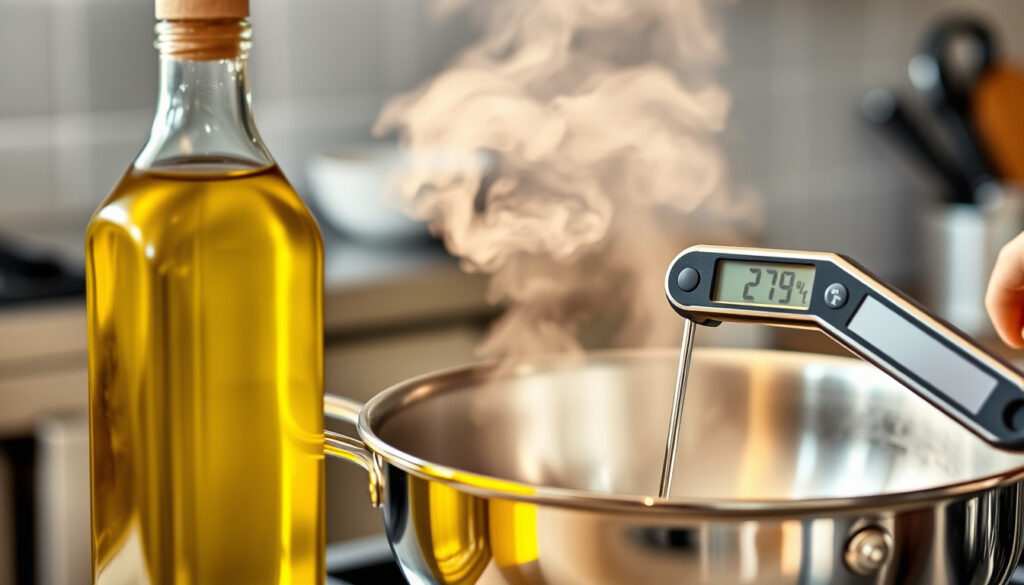
Few kitchen decisions spark as much debate as which oil to reach for when the heat turns up. Avocado oil’s smoke point — often cited at 520°F for refined varieties — makes it a top contender for high-heat cooking, but the gap between refined and extra virgin changes how you cook.
Refined avocado oil smoke point: 520°F (271°C) ·
Extra virgin avocado oil smoke point: 482°F (250°C) ·
Extra virgin olive oil smoke point: 410°F (210°C) ·
Ghee smoke point: 485°F (252°C) ·
Canola oil smoke point: 400°F (204°C)
Quick snapshot
- Refined avocado oil smoke point: 520°F (271°C) (Wikipedia smoke point template)
- Extra virgin avocado oil smoke point: 482°F (250°C) (Wikipedia smoke point template)
- Avocado oil has a higher smoke point than olive oil and most common cooking oils (WebstaurantStore food service reference)
- Exact smoke point can vary up to 20°F by brand, batch, and processing method (Flavorish cooking education platform)
- Long-term health effects of cooking with different high-smoke-point oils are still being studied (Flavorish cooking education platform)
- Antioxidant levels in avocado oil versus olive oil: clinical significance not fully established (Flavorish cooking education platform)
- No major timeline shifts — avocado oil usage has remained stable in recent years
- Expect more research on how processing quality affects smoke point consistency
- Consumer demand may push for clearer labeling between refined and unrefined avocado oil
The smoke point of avocado oil is consistently high across multiple sources, but the gap between refined and unrefined varieties is wide enough to matter. Here are the key numbers side by side.
| Oil type | Smoke point (°F) | Smoke point (°C) |
|---|---|---|
| Refined avocado oil | 520°F | 271°C |
| Extra virgin avocado oil | 482°F | 250°C |
| Extra virgin olive oil | 410°F | 210°C |
| Ghee | 485°F | 252°C |
| Canola oil | 400°F | 204°C |
| Sunflower oil | 440°F | 227°C |
| Refined coconut oil | 450°F | 232°C |
Is avocado oil ok for high heat cooking?
Yes, and in most cases it is the best option. The WebstaurantStore food service reference puts refined avocado oil at 480–520°F, well above the 450°F threshold for frying, stir-frying, and broiling. The same source recommends oils over 450°F for the hottest cooking methods.
Smoke point of avocado oil
- Refined avocado oil: 520°F (271°C) — suitable for deep frying and searing (Wikipedia smoke point template)
- Extra virgin (unrefined) avocado oil: 482°F (250°C) — still very high, fine for most high-heat tasks (Wikipedia smoke point template)
Refined vs unrefined avocado oil
The difference in smoke point between refined and unrefined avocado oil is substantial — roughly 38°F (21°C) according to Wikipedia, and as much as 170°F per some other sources. The Zero Acre cooking oil guide notes that avocado oil can reach up to 482°F, placing it among the highest-smoke-point cooking oils available.
Comparison with other high-heat oils
Avocado oil’s refined smoke point beats ghee (485°F) and easily clears canola oil (400°F) and extra virgin olive oil (410°F). The Mountain Rose Herbs smoke point chart lists refined avocado at the same 480–520°F range, confirming its top-tier status.
A home cook who grabs a bottle of extra virgin avocado oil expecting the same 520°F tolerance as refined might smoke out the kitchen. The difference between 482°F and 520°F matters when you push a pan past 500°F for a perfect steak sear.
Which is better olive oil or avocado oil?
It depends on the cooking method and the flavor you want. Avocado oil wins on heat tolerance; olive oil wins on antioxidant content and taste. Here’s a direct comparison.
| Attribute | Avocado oil (refined) | Extra virgin olive oil |
|---|---|---|
| Smoke point | 520°F (271°C) | 410°F (210°C) |
| Fat composition | ~70% monounsaturated | ~73% monounsaturated |
| Antioxidants / polyphenols | Low to moderate (Zero Acre) | High (WebstaurantStore) |
| Flavor | Neutral, buttery | Fruity, peppery |
| Best for | High-heat frying, baking, grilling | Dressings, dips, low-heat sautéing |
Smoke point comparison
Avocado oil’s smoke point is roughly 110°F higher than extra virgin olive oil, making it the clear choice for high-heat cooking. However, both oils are primarily monounsaturated fats, which are considered heart-healthy.
Nutritional profiles
Mountain Rose Herbs smoke point chart notes that both oils are rich in healthy fats, but olive oil offers a broader range of polyphenols and antioxidants that may provide additional health benefits.
Flavor and usage
Olive oil brings a distinctive taste that some dishes need. Avocado oil’s neutral flavor makes it a versatile workhorse — you can use it in everything from stir-fries to mayonnaise without altering the taste.
Is there a downside to avocado oil?
Despite its impressive smoke point, avocado oil has drawbacks worth knowing. Zero Acre cooking oil guide points out that some avocado oils are processed with chemicals if not cold-pressed, and the antioxidant content is lower than extra virgin olive oil.
Potential drawbacks of avocado oil
- Higher cost — avocado oil is noticeably more expensive than canola, vegetable, or sunflower oil (WebstaurantStore food service reference)
- Processing quality varies — some brands use heat or chemical extraction that may reduce nutrients
- Lower antioxidant levels compared to extra virgin olive oil (Zero Acre)
Processing and quality
The Flavorish cooking education platform emphasizes that refining increases smoke point but may strip some beneficial compounds. Unrefined avocado oil retains more nutrients but has a lower smoke point (350–400°F per some sources).
Cost and availability
Avocado oil can cost two to three times more than canola or vegetable oil. For everyday high-heat cooking, many home cooks find it worth the premium, but it’s not a budget staple.
If you buy a cheap “avocado oil” blend, you might be getting mostly other oils. Always check the label for “100% pure avocado oil” and cold-pressed if you want the unrefined benefits.
What is the healthiest oil for high temperature cooking?
Avocado oil consistently tops the list, but it shares the podium with ghee and refined coconut oil. Each has different health profiles.
Top oils for high heat
- Avocado oil (refined): Smoke point 520°F, high monounsaturated fat, neutral flavor
- Ghee: Smoke point 485°F, dairy-free, rich taste (WebstaurantStore food service reference)
- Refined coconut oil: Smoke point 450°F, high saturated fat, mild coconut flavor
Avocado oil vs ghee vs coconut oil
Ghee is a close second to avocado oil for high heat and is a good choice for those avoiding dairy. Refined coconut oil has a lower smoke point and is higher in saturated fat, which some dietary guidelines recommend limiting. The Mountain Rose Herbs smoke point chart confirms that avocado oil offers the best balance of high smoke point and heart-healthy fat profile.
Health considerations
Zero Acre cooking oil guide notes that high thermal stability is critical — oils that break down at high temperatures can form harmful compounds. Avocado oil’s combination of a high smoke point and a fat profile rich in monounsaturates makes it a standout choice.
For daily high-heat cooking, avocado oil is the healthiest option because it withstands high temperatures without breaking down and its fat profile supports cardiovascular health. Ghee is a solid alternative for those who want a buttery flavor.
What is the unhealthiest oil to cook with?
Oils with low smoke points and those high in unstable polyunsaturated fats are riskier for high-heat cooking. The WebstaurantStore food service reference recommends avoiding flaxseed, walnut, and unrefined seed oils for frying because they smoke at low temperatures.
Oils to avoid at high heat
- Flaxseed oil (smoke point ~225°F)
- Walnut oil (smoke point ~320°F)
- Unrefined canola or sunflower oils (smoke point ~225°F)
- Partially hydrogenated oils (contain trans fats)
Trans fats and oxidation
Flavorish cooking education platform warns that heating oils past their smoke point creates free radicals and potentially harmful compounds. Reusing oil multiple times compounds this risk.
Better alternatives
For any high-heat job, swap low-smoke-point oils for avocado oil, ghee, or refined coconut oil. Even extra virgin olive oil, at 410°F, is a better choice than flaxseed or walnut oil for medium-high heat.
Avocado oil: the upsides and downsides
Upsides
- Highest smoke point among common oils (520°F refined)
- Monounsaturated fat profile supports heart health
- Neutral flavor works in sweet and savory dishes
- Versatile for frying, baking, grilling, and dressing
Downsides
- More expensive than canola, vegetable, or sunflower oil
- Lower antioxidant content than extra virgin olive oil
- Processing quality varies — some refined oils use chemicals
- Unrefined version has lower smoke point (482°F) than refined
What we know for sure — and what we don’t
Confirmed facts
- Avocado oil has a higher smoke point than olive oil and most common cooking oils (WebstaurantStore food service reference)
- Refined avocado oil has a higher smoke point than unrefined (extra virgin) avocado oil (Wikipedia smoke point template)
- Smoke point data from Wikipedia, WebstaurantStore, and Mountain Rose Herbs are consistent within 10–20°F
What’s unclear
- Exact smoke point can vary up to 20°F by brand, batch, and processing method (Flavorish cooking education platform)
- Long-term health effects of cooking with different high-smoke-point oils are still being studied
- The clinical significance of lower antioxidant content in avocado oil versus olive oil is not fully established
What experts and brands say
Avocado oil when cooking has a smoke point of up to 500°F, making it the most versatile cooking oil!
— Chosen Foods (Chosen Foods brand blog)
A high smoke point means the oil will not smoke at normal cooking temperatures. High smoke point oils and good thermal stability are excellent choices for high-heat cooking.
— Zero Acre cooking oil guide
Refined avocado oil is recommended for high-heat cooking such as frying and stir-frying, while unrefined oils are better for low-heat applications like gentle sautéing or dressing.
— Flavorish cooking education platform
For anyone who regularly cranks up the heat — whether for crispy fried chicken, a perfect stir-fry, or seared salmon — the choice of oil matters. Avocado oil, especially refined, gives you the widest temperature safety margin without sacrificing heart-healthy fats. The trade-off is cost and lower antioxidant density compared to olive oil. For the home cook who wants one oil for nearly everything, avocado oil is the strongest candidate. But if flavor and polyphenol content are priorities, keep olive oil for cold use and avocado oil for the burners.
For a deeper dive into how refined avocado oil achieves its 520°F smoke point, check out this comprehensive avocado oil smoke point guide.
Frequently asked questions
Can you use avocado oil for deep frying?
Yes. With a smoke point of 520°F, refined avocado oil is excellent for deep frying. It can handle the sustained high temperatures without breaking down.
Does avocado oil go bad?
Yes, like all oils, avocado oil can oxidize and go rancid. Store it in a cool, dark place and use within six months of opening. Refined avocado oil has a longer shelf life than unrefined.
What is the best avocado oil brand for high heat cooking?
Look for brands that clearly label “refined” or “high-heat” avocado oil. Chosen Foods, Primal Kitchen, and La Tourangelle are widely available and tested for quality. Check for cold-pressed refined options.
How should I store avocado oil?
Store avocado oil in a cool, dark pantry away from direct sunlight and heat. Avoid storing it near the stove. A sealed glass bottle is best.
Is avocado oil better than vegetable oil for frying?
Yes. Avocado oil has a higher smoke point (520°F vs vegetable oil’s 400–450°F) and healthier fat profile (mostly monounsaturated). Vegetable oils often contain highly processed seed oils with higher omega-6 content.
Can I use avocado oil for baking?
Absolutely. Its neutral flavor and high smoke point make it ideal for baking cakes, muffins, and breads. It replaces butter or vegetable oil at a 1:1 ratio.
Does avocado oil have a neutral taste?
Yes, refined avocado oil has a very neutral, buttery flavor that doesn’t overpower dishes. Unrefined (extra virgin) avocado oil has a slightly grassy, avocado-like taste similar to olive oil.
Is avocado oil healthier than coconut oil?
For most people, yes. Avocado oil is primarily monounsaturated fat, while coconut oil is about 90% saturated fat. The American Heart Association recommends limiting saturated fat. Avocado oil also has a higher smoke point.
More related posts
 Cast of The Beast in Me: Actors, Characters, True Story
 Cardinals vs Mets Match Player Stats: June 2026 Series
 222 Angel Number Meaning: Love, Warnings, Twin Flames
 NASCAR Race This Weekend – Food City 500 Schedule and Details
 Square Root of 8 Explained: Value, Simplification & Methods
 The Big Comfy Couch: Low-Stimulation Toddler Show
 LSU vs South Carolina: Scores, History & Predictions
 Hokkaido Gals Are Super Adorable Season 2: News & Harem Debate